Welcome to QCD Website, Professional Manufacturer of Aluminum Profile Equipment!
Mobile: 133-8020-3945

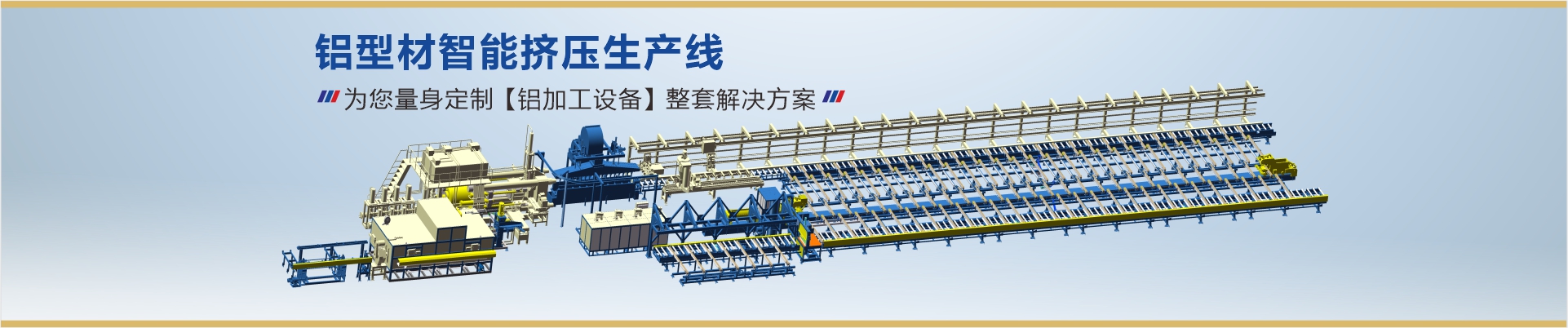


Handling table-Aluminum Profile Machinery
Handling table- Aluminum Profile Machinery,
Aluminum Profile Cooling Bed
(Post-Extrusion Conveying & Cooling Production Line)
1. Working Procedure
Extrusion Discharge → Puller → Online Quenching → Cooling Bed Line → Straightening Machine → Finished Product Fixed-Length Sawing → Material Frame Transfer → Aging Furnace
2. Four Core Functions
- Uniform air cooling: Hot profiles are gradually cooled down to stabilize metallurgical structure and hardness, avoiding deformation and warpage.
- Step-by-step conveying & transferring: Multi-section roller tables or belts automatically transport and layer materials to prevent surface scratches during stacking.
- Auxiliary straightening & shaping: Cooperate with the straightener to correct bending caused by extrusion and ensure high straightness.
- Buffering, sorting and temporary storage: Separate multiple profiles into different lanes to connect the subsequent sawing and framing processes.
3. Four Main Structural Types
- Felt Belt Type (Most Widely Used): Separated segmented belts with scratch-proof felt; single sections can be replaced individually. Standard equipment for 600–2000T extrusion lines processing thin-wall door and window profiles.
- Step Rack Type: Materials are lifted and moved horizontally by racks with excellent load capacity, suitable for heavy-duty industrial aluminum with large cross-sections and thick walls.
- Chain Conveying Type: Featuring strong load bearing, durability and high temperature resistance, it is widely applied in continuous production lines for large-tonnage extruders.
- Horizontal Layered Storage Type: Equipped with multi-layer material storage stations for large buffer capacity, ideal for centralized post-processing of multiple production lines and automated smart workshops.
4. Basic Composition
Infeed Table + Multi-stage Cooling Conveying Sections + Hydraulic Lifting & Unloading Platform + Material Handling Manipulator + Forced Air Cooling System + PLC Interlinked Electric Control System



 Copy product links
 Long by picture save/share
INQUIRY


Add Successfully


Share to > >

点击右上角
分享给朋友吧

